Sunday, June 28, 2015

Chimes at Midnight


439840Serendipity gives life an interesting tang. In the chaotic vibrations of subatomic particles which make up the universe as we know it, all kinds of improbable coincidences occur. One hit me this past week -- the intersection of a front-page news story with a book I had just finished reading.

The news story: The Supreme Court legalized same-gender marriage. I, like the rest of the country, had been watching for several weeks as headlines grew more frenzied with the approach of the Court's decision in regards to gay rights.

The book: Midnight Cowboy. This bittersweet novel from 1965 follows the career of Joe Buck, a naive young man who moves from Texas to New York City, planning to survive by hiring his services out to rich women.

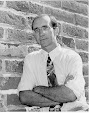
The intersection: my complete and total surprise at finding out that the book's author, James Leo Herlihy, was gay.
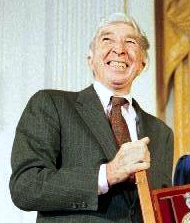
James Leo Herlihy

As I read the book, it simply didn't occur to me that Cowboy was a gay novel. Sure, Joe sometimes had sex with men, but that was just for money. His friendship with Rizzo never struck me as anything but platonic. (I admit that sometimes a story's too-subtle undercurrents may elude me.)

So here again we have the question coming into play about how much outside knowledge we should bring to our reading. Does the fact that the author is gay mean the work is? Even when the wording never suggests anything even remotely romantic in the male-to-male friendship? Another author/work pair that comes to mind is Tennessee Williams and Cat on a Hot Tin Roof. Is that merely a "gay" drama? (Herlihy and Williams used to swim together at twilight in Key West, Florida.) How about Truman Capote's Breakfast at Tiffany's? Can't that be looked at as a fine story without seeing it as the work of a gay man? How much should the reader infuse into the book? When does a book stop being the author's and become the reader's? How different would my reading of the book have been had I known Herlihy's sexual orientation beforehand?

Another point: On 21 October 1993, Herlihy overdosed on sleeping pills. The next day, the New York Times reported that the cause of death was revealed by Joe Frazier, "a friend." Although understanding human motivation remains nothing but guesswork, one cannot help wondering if Herlihy would still have killed himself after this week's Court decision.

Friday, June 12, 2015

Zombies ... gotta love 'em


Normally, I'm not a fan of zombies. That's because usually any plot with zombies is every plot with zombies. Just about every story about zombies that can be written, has been written.

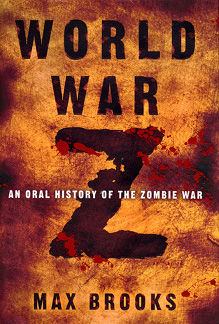
World War ZIf anything makes a zombie story at all interesting, it centers on some non-zombie aspect of the story. Which is true of the zombie CD I watched this afternoon, World War Z. I only picked it up at the library because I was in a hurry and willing to take just about anything. (Actually, I think what caught my attention was the cover which shows Brad Pitt in front of a big red Z ... which might have something subliminal to do with my childhood fascination with Zorro, but I can't say for sure.)

World War Z book cover.jpgThe 2013 movie is based on a 2006 book by Max Brooks, the son of -- go figure -- Mel Brooks. (Isn't the serendipity that moves the world just too marvelous?) I would have requested the book from my local library, but the only format they have it in is electronic, and since I have no Kindle or other related hardware, I guess I'll just have to rely on the movie to fill my zombie quota.

So, let's talk about the movie. Actually, I don't want to. The movie is boring, so why should I waste our time talking about it? The only thing that made any difference to me was one short sentence uttered at the end of the movie by the hero, Gerry Lane. In a voice-over on top of the most lackluster reunion of a nuclear family unit I've seen, Lane says that in order to overcome the zombie plague, humans must help each other. In fact, his simple declarative statement is: "Help each other." And that is what I want to talk about here.

I might be willing to take the stance that "Help each other" is the prime ethical injunction. However, what would happen if, oh, say, the Republican Party were to adopt the motto of 'help others'? Would they lay aside their frenzied money-grubbing and buy a homeless person a meal? Would they help subsidize the heating bill of an out-of-work single parent and children? Admittedly, the platform of the Grand Ol' Party includes many planks besides lack of social responsibility: the fear of centralized power, for instance, also holds a powerful sway over Republicans. (Ironically, their first President -- Lincoln -- fought viciously to preserve federal power.) However, one of the the main points of contention with the GOP lies in its aversion to Federally-funded social-assistance programs such as Food Stamps and Welfare which, despite all the fraud, help keep people alive. By casting such measures as experiments in socialism, Republicans can decry expenditures as undemocratic, and therefore unAmerican. The wealth-pots of conservatism justify their tightfistedness by painting anyone who just happens to be out of luck and needing a helping hand, as a two-bit Commie slacker, an attitude which reminds me of the time the radical Jewish teacher Yeshua told a rich young ruler to sell everything he had and give it to the poor ... something no conservative in our time could do either, even to please God Himself.

So the question raised by this movie comes down to whether individual Republicans, without crucial networks of mutual support and benevolence, could survive a zombie apocalypse. Then again, with that said, when is it not the zombie apocalypse?

Wednesday, May 13, 2015

Mr. Updike


Trust Me.jpgThe other day, I finished reading The Book Thief, and, casting around for something to fill my time until I could get to the library, I picked up my copy of John Updike's short-story collection, Trust Me. John Updike. Now there's a name you haven't heard in quite a while. One of The Big Guns. The New Yorker. The Atlantic. Playboy. Born in 1932 in Shillington, Pennsylvania. Graduated from Harvard in 1954. Spent a year in England on a scholarship in Oxford. On the staff of The New Yorker from 1955 to 1957. One of only three writers to be awarded the Pulitzer Prize twice. Died in 2009.

In my early days, my preference ran to another writer named John -- John Cheever. (Whom I still recommend highly.) I had the impression that Cheever's stories were of a higher quality than Updike's, though I had never actually read any of Updike's. I assume this judgment came from what I had absorbed about Mr. Updike through nebulous remarks gleaned from reviews and book covers: his preoccupation with sex and infidelity, drinking and New England lifestyles. Not being married myself, I had little interest in the swirling interplay of personalities that made up a couple; their infidelities especially bored me. Raised Southern Baptist, I had little interest in the rutting habits of Northern Episcopalians. That a book by Updike came to rest on my shelf is due, I'm sure, merely to a casual saunter through some used-book store and a curiosity about a writer I had no real intention of reading.


John Updike with Bushes new.jpg
John Updike in 1989
That said, however, I admit I may have done Mr. Updike an injustice. The story I have just now finished -- "The Other" -- makes me think of the reddish-orange glow of sunset at the end of a warm September day. It has a feeling of languid nostalgia about it, a wistful reflection on what might soon be, tinged with a mild regret for what might have been. Yes, there is a casual, almost flippant, ambling on about carnal relationships, but there is also something shy, almost coy, with the language in which the author couches recognition of unrealized possibilities, of golden moments forever just beyond reach.

It may be that if I continue reading in this collection, I'll find all the other stories are merely disappointing variations on this same theme, redundant retellings to the point of tawdriness. My instinct, however, is to give Mr. Updike at least one more chance to prove himself. Who knows? Maybe I'll even like Rabbit Run.

Friday, March 13, 2015

Physics Phight


Several weeks ago, I came across a non-fiction book called The Fabric of the Cosmos by Brian Greene about the ultimate foundation of the Universe. Some of the fundamental assumptions made by the author seemed to need a bit more tweaking, but all in all, I found the book informative and insightful.


Then I read The Trouble with Physics by Lee Smolin which rips apart the theories underlying Fabric and disagrees on vital points with Greene as a scientist and a writer. (A 2003 TEDtalk by Dr. Smolin is here.)


I was stunned. Who would have thought there could be that much acerbic feeling between scientists? Aren't scientists supposed to be dispassionate and coldly logical? And how could there be such a vast difference of opinion between two physicists and what they see when they switch on their molecular scanners?

Part of the problem, of course, is that there are no scanners that can give us a detailed look at the smallest particles. For one thing, according to the Uncertainty Principle (or because of it, according to another way of formulation), the more precisely the position of a particle is gauged, the less precisely its momentum can be ascertained. Another glitch is in the definition of 'particle.' To physicists involved with the ultimate building blocks of the world, those blocks may not be what we as creatures in the macro-world think of as 'things'. In some sense, they may only be a quasi-metaphysical position or potential. And then there is the aspect of relationships of one particle to others in time as well as space. Whatever those two terms mean.

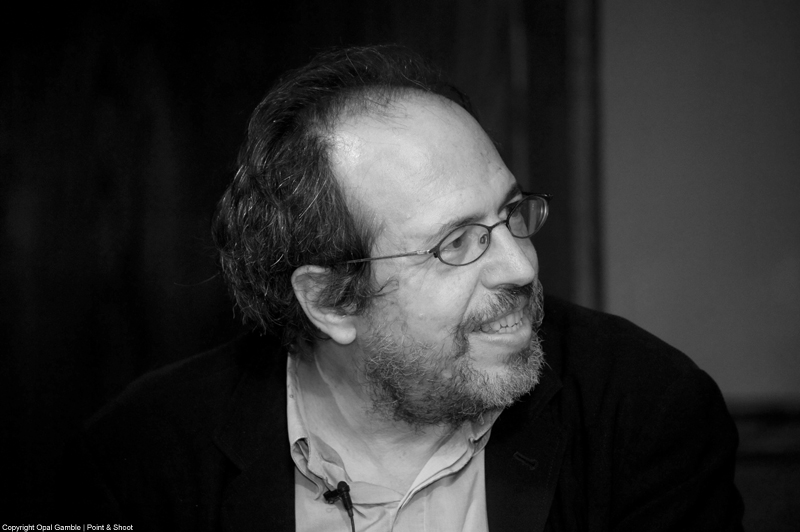
Lee Smolin
Greene views strings as the fundamental building blocks of the World-As-We-Know-It within space, time, and other dimensions, whereas Smolin goes so far as to say that "the continuum of space is an illusion" (page 240), and mentions twistor theory which states that space itself arises as an attribute of the spin of elemental particles. After all, if the simplest aspect of a particle is its spin either up or down, then the existence of the relational attributes 'up' and 'down' must depend on the existence of that particle.

Besides the pure science of the conflicting views, the two books present insights into the characters of the authors: whereas Greene presents his scenario of the string revolution as a fait accompli, Smolin offers a more flexible insight when he states that in science, it is always future generations which substantiate theories formulated by the present one.

Tuesday, March 3, 2015

Proud of My Friends

Every morning when I fire up my computer and get online, the first page I visit is the blog of Janet Reid, a literary agent  with FinePrint, an agency in New York City. Today she was responding to a question by a reader about "comp titles" -- books writers can compare their own books to as a way of showing what kind of novel theirs is. Janet's last comment was about libraries:

Librarians, like writers, are the foundation of democracy and we all need to make sure both stay strong.

So here's another shout-out to all my friends at the local library. Y'all rock!

Thursday, February 26, 2015

That Sunny Raisin


"Harlem" by Langston Hughes:

What happens to a dream deferred?

      Does it dry up
      like a raisin in the sun?
      Or fester like a sore—
      And then run?
      Does it stink like rotten meat?
      Or crust and sugar over—
      like a syrupy sweet?

      Maybe it just sags
      like a heavy load.

      Or does it explode?

 from Collected Poems. Copyright © 1994 by The Estate of Langston Hughes.

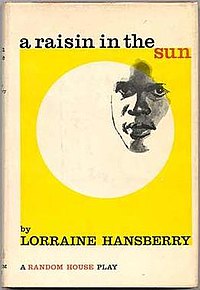
WhenFront cover of the first edition Lorraine Hansberry wrote her play, "A Raisin in the Sun," she took its title from a 1951 jazz poem by Langston Hughes. The play, directed by Lloyd Richards, had its Broadway debut on 11 March 1959, and starred Sidney Poitier, Ruby Dee, Claudia McNeil, and Diana Sands. Two years later, in 1961, it was made into a film directed by Daniel Pietrie with the Broadway cast. Both the play and the movie garnered multiple nominations and awards. Several revivals -- both on film and across the boards -- have been produced.

The story centers on the dreams and struggles of the Younger family in their bid to leave the tiny, two-bedroom apartment where they have lived for years on the south side of Chicago. Mr. Younger the elder has recently passed away, and his family anxiously waits for the insurance check to arrive. When it finally comes, the family is divided about how to use the money. The widow, to whom the check is made, wants to use the funds to move the family out of their lower-middle-class apartment building into a house of their own. Her daughter wants to use it to complete her studies for a medical degree. Her son wants to go in with friends and buy a liquor store. Her daughter-in-law wants her own son and the baby on its way to have a chance for a better life.

Scene from the play. Ruby Dee as Ruth, Claudia McNeil as Lena, Glynn Turman as Travis, Sidney Poitier as Walter, and John Fiedler as Karl Lindner.An exploration of the dreams, setbacks, and triumphs of a mid-twentieth century family, Raisin presents the American dream as the worthy aspiration of any and all citizens. However, though the daughter does aspire to the American dream in the form of a medical degree, she also becomes enthralled with the idea of her African heritage, and with Nigeria as a land of opportunity.

The kernel of Hughes' poem -- the idea of a dream deferred -- also constitutes the theme of Hansberry's play. In the poem, however, the tension of racial suppression leads to an explosion whereas in the play it leads to amalgamation. Granted, the assimilation goes against the express wishes of the white folks who own homes around the Youngers' new property, but the Youngers promise to try their best to blend in by being "good neighbors."

Though the Youngers' decision to move into the middle-class suburb is presented as a noble thing, somehow it strikes me that if they flee from the low-class apartment building to the middle-class suburbs, they might better themselves materially, but only by accepting the definition of value of the standard, white American dream. And isn't that the very thing the poem warns against? That instead of exploding in rage, the dream only sags, only stinks like rotten meat.

Monday, January 26, 2015

A Stitch in the Cosmos

The Fabric Of The Cosmos by Brian Greene
A few weeks back, I came across the Website for the television production of a show on the PBS science series Nova called The Fabric of the Cosmos. When I learned that the show was based on a book, I decided to read the book first, then watch the program. It's a good thing I did it in that order. As in most cases, the book is much better.

Brian Greene World Science Festival.jpg
Brian Greene in 2008
The author, Brian Greene, a theoretical physicist at Columbia University, espouses the theory of superstrings as the best way to describe the foundation of the universe. The theory attempts to explain all subatomic particles and fundamental forces which make up the cosmos. It tries to best Einstein by doing what the great physicist never could -- reconcile gravity, relativity, and quantum mechanics.

Einstein 1921 by F Schmutzer - restoration.jpg
Albert Einstein in 1921
Greene presents stories of the triumphs of physics from Newton to Hawking. Newton thought of space as a thing, the empty stage -- eternal and unchanging -- on which everything happens. For Einstein, however, space bends and swirls, interacting with matter and energy in ways previously undreamed of. In fact, Einstein showed that space and time are inseparable, that they make up one entity he called spacetime.

For Greene and many of his fellow physicists, spacetime is the loom upon which the fabric of the universe is woven. Instead of the classic view of atoms as "dots that are indivisible and that have no size and no internal structure," Greene explains that "these particles are not dots. In superstring theory, every particle is composed of a tiny filament of energy, some hundred billion billions time smaller than a single atomic nucleus...shaped like a little string."  No longer do we have the tiniest dots of matter that can exist; instead, we have strings that act like indivisible dots. These strings vibrate, and the difference in their rates of vibration separates one kind of string from another by giving rise to their different characteristics such as spin, mass, and charge. These aspects distinguish different types of atoms which combine to form different types of molecules which clump together to form you and me and the world.

Unfortunately for the scientists advocating superstrings as the ultimate answer to questions about the Universe, reflection on their claim undermines their argument. The problem resides not in the smallest particles of matter, but in terminology. For example, in the phrase 'a tiny filament of energy', what is energy? Maybe in some obscure tome in some dusty library of some forgotten institute, there lurks a definition of 'energy.' However, even if our respected scientific colleagues provide such a delineation, their musings are just as faith-based as those of religion.

Indeed, describing the cosmos down to its ultimate particle provides in no way a measure of value. Superstring theory cannot say anything about why a person should act in a moral way. No scientific supposition can. The moment it tries, it makes a judgment, and that is beyond the purview of science. Science explains; it cannot judge.

Nothing about superstring theory can be used to say that one should not murder. Neither can it say why a person should not lie or cheat or steal. It cannot comment on beauty. There is no way to get from the physicist's is to the good man's ought. Which is not a shortcoming of science; it's simply a limitation that should be realized. The very reason for doing science can only come about because of the moral judgment that one ought to pursue knowledge.

As for the ground of existence of the Universe, science again can say nothing because it cannot go back further than the beginning. Which is where faith plays its trump card. A scientist must have faith in Science as much as a good man must have faith in the Good. Science can say nothing beyond the fact of creation; only faith can. In the face of God, science is silent.