Monday, March 14, 2022

Luminiferous


Literature always attempts to answer the riddle of life. Not that there is a riddle of life ... it's that life is the riddle. Unfortunately, the answer--as well as the riddle itself--is different for each human being. Which means that the universe is filled with the cacophany of everyone shouting answers and no one listening.

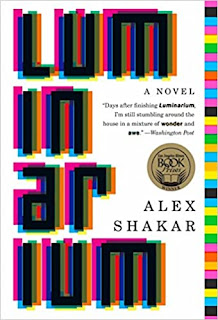
Luminarium tries to tame the whirlwind of chaos and present it in a meaningful way. Which, of course, is impossible. Chaos tamed is no longer chaos. Pandemonium (from the Greek for "all demons") has no structure, while meaning is nothing but structure. At one point, in order to sugar-coat his narrative in familiar terms, Shakar suggests that the universe is the ultimate computer game. The idea is facile and hackneyed, applicable only to our cultural milieu, itself grounded in an illusion of shifting electrons and strobe-light impermanence adapted from television and movies.

Shakar addresses the ontological dilemma by positing the idea that the existential symmetry between virtual particles is actually our inability to perceive higher dimensional reality, an intriguing idea which is immediately lost in the narrative.

Maybe that's the basic point of narrative in the first place: to show us things which we might not see on our own. But if it is, what do we do when the light at the end of the tunnel turns out to be an on-coming train?

Thursday, December 20, 2018


Actually, nothing to say; I just can't imagine a living creature that size.

Saturday, May 26, 2018

Americans in Paris


Image result for fox theater atlantaThe Fabulous Fox Theater in downtown Atlanta can literally stun a new visitor with its fantastic construction and bizarre composition. Originally conceived as a home for the Shriners organization, the building includes many designs inspired by Far-East architecture such as the Alhambra in Spain and the Temple of Karnak in Egypt.
As a venue for a variety of shows, the Fox has presented Broadway extravaganzas like The King and I and Beauty and the Beast as well as individual and group music stars such as Aretha Franklin and Mastodon. One of last year's offerings was An American in Paris, the award-winning musical based on the movie of the same name.


Image result for fox theater american in parisUsually, the three-dimensionality of stage plays provide a more complete entertainment event than the two dimensions of movie productions. The key word here is "usually." In this case, the use of rambling set pieces and overdone displays of garish theatrical innovation detracted from the enjoyment of the production itself. Sometimes less really is more.

Thursday, July 27, 2017

One Foot In Front Of The Other

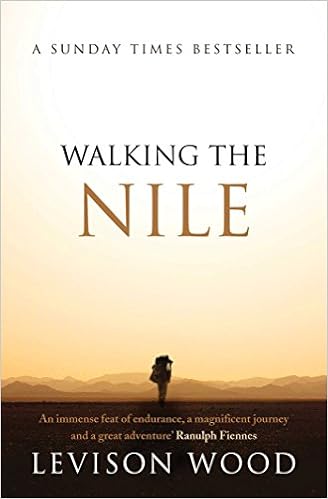
Walking is something most folks take for granted. Some people, though, carry it to extremes, 'extremes' as in 'the ends of the Earth.' Levison Wood, a British citizen, regularly sets himself goals too formidable for most of us to consider, let alone undertake. A man of gumption and fortitude, he has walked the length of the Nile, climbed the Himalayas, and hiked the Americas.
PANO-2.jpg
Levison Wood


Wood served as an officer in the British Parachute Regiment in Afghanistan in 2008 fighting against the Taliban (which in Pashto means 'students'). In his 2015 book, Walking the Nile, Wood details his stroll from a spring located in the forests of Rwanda beneath a sign reading "This is the furthest source of the Nile river" to the Mediterranean Sea.


62288main_aldrin_ladder_full.jpg
Buzz Aldrin
Image result for hillary on everest photo
Hillary & Norgay
As a testament to the human spirit, such an achievement ranks along with Edmund Hillary and Tenzing Norgay in their reaching the pinnacle of Everest, though it might not be in quite the same league as Neil Armstrong and Buzz Aldrin walking on the moon. Still, how many of us will ever do anything on this scale?

Thursday, December 29, 2016

Death Knell of the American Republic?

The Roman Republic was established in 509 B.C. with the overthrow of the last king of Rome, Tarquin the Proud. That Republic lasted about four hundred and fifty years until 44 B.C. when Julius Caesar (Latin pronunciation: 'kaisar') installed himself as dictator-in-perpetuity. The Roman Empire followed in 31 B.C. with the proclamation by the Senate of Augustus Caesar as Emperor.

With our two Houses of Legislature, the office of the President, and the Supreme Court all controlled by the same party, and the President-elect a self-aggrandizing multi-millionaire showman/huckster capitalist motivated by personal greed, how much longer will the American Republic stand as a government by the people for the people?

Friday, December 23, 2016

Alas, Everyone

A few days ago I came across a book I hadn't read for several decades, so I decided to give it another whirl. After all, any book you don't remember is a new book.

The novel was Alas, Babylon by Pat Frank, published in 1959 by J.B. Lippincott of Philadelphia, Pennsylvania. Although it is easy for us to look back almost sixty years later and snicker at how dated the writing is, the fact remains that it was one of the first novels to deal with the possibility of nuclear warfare and what that entails. Since then, numerous "end-of-life-as-we-know-it" books have hit the market, but with the recent posturing by Trump and Putin, the whole idea of nuclear holocaust has gotten closer to reality.

Maybe a good Christmas gift to the American president-elect and the Russian president-in-perpetuity would be a copy of Alas, Babylon, just to give them an idea of how important de-escalation is to the continuation of human civilization on planet Earth.

Friday, October 21, 2016

Damned Spot and Brief Candle

The first performance of Shakespeare's Macbeth probably took place in Jacobean England in 1606 during the reign of James I. Four hundred and nine years later, in 2015, yet another film version was released.

This movie, adapted by Jacob Koskoff, Todd Louiso, and Michael Lesslie, directed by Justin Kurzel, and starring Michael Fassbender and Marion Cotillar, competed for the Palme d'Or prize at the 2015 Cannes Film Festival.

From the start of the film, the writers choose to focus on different aspects of the tragedy than does the playwright himself. The Bard's version begins with three witches on a blasted heath in Scotland, but the movie opens with the funeral of the child of Macbeth and his wife. By focusing on the parents' grief, the writers give a glimpse into an aspect of the characters of the couple which Shakespeare only hints at in one short phrase by Lady Macbeth: "I have given suck, and know how tender 't is to love the babe that milks me." (Act I, scene 7)

Considering how Macbeth's heirless state later plagues him, this does indeed seem a curious point not to emphasize. It also humanizes Lady Macbeth a bit, explaining to some degree her coldblooded nature. (It is she, after all, who several times spurs her vacillating husband on to fulfill the prophecies of the witches.)

Another surprising innovation by the scriptwriters is in the interpretation of the prediction from Act IV, scene 1 that Macbeth has nothing to fear till "Great Birnan wood to high Dunsinane hill shall come against him." The Bard himself meant that to refer to soldiers using leafy branches from trees of the forest to shield themselves from the lookouts on the castle walls. In this production, though, the advancing army sets fire to the woods, and Macbeth stands agast at the smoke and burning ash blown by the wind to the castle.

The final updating is ending the film with Fleance, son of Banquo, dashing forward, running into a future where, as predicted, his offspring will be royalty, all the way to James himself, the first king to join the throne of Scotland to that of England and Ireland, and who extended the Golden Era of Elizabethan England. Not only did James support the career of Shakespeare, but also those of Donne, Bacon, and Jonson, and even presided over the composition of the Authorized Version of the Bible. So the long reach of the doomed Scottish lord circles back around to Shakespeare himself.

Wednesday, September 21, 2016

Other People's Wars

Like most folks, I tend to think myself moderately savvy about the world, so it surprises me whenever I'm confronted with a slice of history with which I'm unfamiliar. (Which happens all the time.) Take for instance, the Siege of Leningrad during World War Two. Because the siege concerned two countries, neither of which was the United States, I -- and I assume, most Americans -- have little understanding of that engagement. Even though it was one of the war's most decisive confrontations, because it was fought on the other side of the world by groups which had little relevance to me a decade and a half later in my late 1950s childhood, it had no perceived impact on my tiny outpost in the backwoods of Arkansas.

The first inkling I had of its importance came with the U.S. film, Enemy at the Gates in 2001. The movie seemed to me mildly interesting, but nothing about it raised it above the thousands of other films just like it: a war movie with a love interest. Yeah, yeah, been there, done that. The impact of the setting was diminished by the banality of the subplot of boy-vs.-boy-for-girl.

My epiphany came with the book City of Thieves by David Benioff, one of the fellows responsible for bringing Game of Thrones to television. "Thieves" -- set in the Russian city of Leningrad (aka St. Petersburg) during the Nazi siege -- gives a stark depiction of what war means to people, be they generals dining on roasted chicken or urchins starving in the streets.
David Benioff

Here again is that universal guy-v.-guy-over-gal subplot demanded by contemporary market-driven bottom-liners, but at least the main plot of survival-during-wartime comes through with all its unflinching brutality. Strangely enough, this brutality is what gives the best reflection of its benevolent twin, nobility.

Even the surprise revelation of the ending doesn't detract too much from the overall hopeful tone of the book as a whole. After all, destruction-of-all-that's-civilized (a staple of Benioff's GoT series) is simply the evil twin of all's-well-that-ends-well.

Thursday, June 30, 2016

One Boat -- Two Perspectives


Image result for african queen movie poster
In 1951, when Humphrey Bogart won his only Oscar, it came for his performance as Charlie Allnut in The African Queen, a movie which consistently occupies any Best Movies list. The film became so popular, it overshadowed the book almost completely.

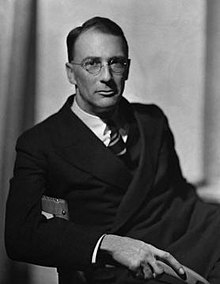
The author, C.S. Forester (1899 – 1966), wrote many novels, the most famous of which was the 12-book Horatio Hornblower Saga about a Royal Navy officer during the Napoleonic Wars. Forester also penned crime novels, children's stories, and science fiction. ("Cecil Scott Forester" was the pseudonym used by Cecil Louis Troughton Smith, an Englishman who eventually settled in the United States.)

CS Forester00.jpg
C.S. Forester
The story of both the book and movie (the "uberstory" so to speak) centers on the adventures of an unlikely two-person crew of a rattletrap of a tramp streamer as they try to escape the German army in the fictional country of German East Africa at the beginning of World War I. The task which Rose (Hepburn) sets herself and Charlie (Bogart) is to destroy the German ship which rules the waters of the lake into which their river empties.

One advantage fiction has is its ability to make characters' thoughts and feelings accessible to the reader in a direct way unavailable to film. Movies share a limitation with real life -- a viewer can only guess at characters' true motivation -- whereas a writer can simply tell a reader what characters are thinking/feeling/hoping/planning. The difference results in literature's ability to provide a deeper analysis of what it means to be human.

However, that doesn't mean literature always tells the better story.

With Forester's background in portraying naval history, his point of view naturally defaults to that of the military. Which means that although the novel does a better job of revealing why Rose and Charlie are the people they are, the real focus of the novel centers more on the conflict of the Great War; characters serve only as conduits of History, a very European point of view.

John Huston - publicity.JPG
John Houston
Director John Huston, on the other hand, focuses on the characters and how they interact, change, and develop as individuals, a very American point of view.

This artistic difference manifests itself in its most pronounced way in the different endings of the two genres: in the book, the African Queen sinks in a storm and the British navy destroys the German boat; in the movie, by one of the most improbable coincidences, the Louisa manages to run into the flotsam of the wreckage of the Queen, exploding the improvised torpedoes Charlie has rigged, thereby sinking the German boat.

So, which is the real story of the African Queen? Is the true version that of the original author, or that of the more widely experienced movie? Does it make sense to say that both versions, though different, are true? What does truth mean in art? Do the two versions represent a Venn diagram with an area of overlap, or are they two completely separate universes with no common ground at all? Can truth be represented in multiple ways and still be truth? Is truth contextual or universal? Does The African Queen, in both or either of its guises, answer any of these questions? What does art do?

Wednesday, May 25, 2016

Questioning Questioning

One of the most basic questions a human being can ask is "What is life?"

In the past, the religious community has dealt with this conundrum. Shamans, priests, and preachers have claimed exclusive revelation about the answer. Nowadays, science -- our new religion -- has taken up the challenge. Instead of being divinely inspired, however, modern teachers are institutionally accredited. Which, like faith, also has the disquieting feel of knuckling under to authority, for the paranoid among us.

The popular press has for some time published volumes on the subject of the electric basis of life. Two such examples are the recent The Spark of Life by Dame Frances Ashcroft and from 1985 Robert O. Becker's The Body Electric. Each of these works explores the function of electricity within and among the basic building blocks of the body -- cells. However, Nick Lane, a biochemist in the Department of Genetics, Evolution and Environment at University College London, takes a rather more in-depth look at the mystery in his The Vital Question. (A presentation by Dr. Lane can be found here.)

book coverAlthough all three books have at their core the idea of bioelectricity being what powers living cells, Dr. Lane's book goes furthest into the hows and whys of the matter, explaining the difference between electricity, the flow of negatively charged electrons, and proticity, the flow of positively charged protons, an idea first formulated by Peter D. Mitchell. "Essentially all living cells power themselves through the flow of protons...." The harvesting of power from "...proton gradients...is universal across all life on earth...." (page 13)

A major tenet of Lane's thesis is that single-celled life arose some 4 billion years ago around alkaline hydrothermal vents on the deep ocean floor. Eventually, two radically different forms of life emerged, though both were based on the same energy gradient structure. Those two forms were bacteria and archaea -- what are termed the prokaryotes (from the Greek 'before the nucleus'). Complex cells -- the eukaryotes ('true nucleus') which make up all the rest of the plethora of life on this planet -- came about, according to Dr. Lane, as a result of a synthesis between the other two, "an endosymbiosis in which a bacterium got inside an archaeon, enabling the evolution of vastly more complex cells." (pages 13 - 14) He further states that there arose a founder population of essentially identical cells which happened only "on a single occasion -- and all plants, animals, algae and fungi evolved from this founder population." (page 40)

Eukaryotes harnessed the savings in energy which came from a simplified gene structure; they had much more power at their disposal. The metabolic rate (energy per gene) of eukaryotes exceeds by several factors that of the prokaryotes. Human beings "use about 2 milliwatts of energy per gram -- or some 130 watts for an average person weighting 65 kg [143.3 lbs], a bit more than a standard 100 watt light bulb. That may not sound like a lot, but per gram it is a factor of 10,000 more than the sun". (page 64) Each one of us literally burns brighter than the sun.

In the earliest times of life on Earth, this huge energy supply drove the explosive diversification of flora, fauna, and microbes. Interestingly, "there is a deep and disturbing discontinuity at the very heart of biology". (page 21) One of Lane's more startling propositions is that evolutionary biology is not predictive. That is, even if we knew all the starting perimeters, we could not foresee the forms which life would take. Just as the Uncertainty Principle means that both the trajectory and the position of an atomic particle cannot be known simultaneously, and Chaos Theory means patterns of repetition cannot be predicted, so the course of life can never be charted. Freedom, stark and beautiful, holy and terrifying, is in our very genes.
Wednesday, May 4, 2016

War Dancing


Some people like radishes. Others prefer bananas. This difference manifests itself not only in culinary choices, but in other areas of life as well. Some readers like literary fiction; others prefer popular titles. Some folks like George R. R. Martin; others prefer J. R. R. Tolkien. Some people like Tony Hillerman; others prefer Sherman Alexie. Mr. Hillerman won honors for his mystery fiction, including the Mystery Writers of America's Edgar award; Mr. Alexie won, among other prizes, the 2010 PEN/Faulkner award for his collection of poems and short stories, War Dances, the title story of which appeared in the August 10, 2009 issue of The New Yorker.

Winner of the PEN/Faulkner Award. I still can't believe I won that huge prize! Learn more at Grove.The point I want to bring up with Mr. Alexie's writing is how much whitewashing goes on in the selection of which writer wins which award, and what writer gets published by whom. Like so much else in capitalist America, publishing exists to make money. Which means editors will buy only those manuscripts they think will appeal to the most buyers. Therefore, they aim at the lowest common denominator. Which in a market dominated by Euro-Americans means Euro-Americans.

So for a non-Euro-American writer to break through in the United States market, his or her writing must appeal to the majority of Euro-American readers. Which means the writing must conform to Euro-American standards and taste. Which means that even when the writer is a bona fide outsider -- as in the case of Mr. Alexie or Toni Morrison or Gore Vidal --  that writer must still engage a majority of Euro-American readers. Which means that no successful Tribal or Black or Gay writer has ever been able to achieve real, meaningful cross-culture appeal. To attract the most readers, a writer must appeal to the most readers. Which in North America means middle-class white.

Mr. Alexie's stories are alternately funny and poignant, touching and barbed. They give a view of the universal human experience. However, they do that through a biased lens. Because of that, their truth is subjective. Though they are about people on the fringe of society, they are still about people in society. They are ultimately Euro-American tales. Because that is what Euro-Americans want.

And that is whitewashing.

Tuesday, January 5, 2016

Somewhere Somebody Sings Something


Cover image for The body electric : electromagnetism and the foundation of lifeThe Body Electric by Dr. Robert O. Becker and Gary Selden, first published in 1985, explores the human body's use of bioelectromagnetism. Dr. Becker directed Orthopedic Surgery at the Veterans Administration Hospital in Syracuse, New York, and was one of the pioneers investigating electric fields produced by living bodies.

Dr. Becker's concern with the injuries of veterans led him to a series of experiments using animals with known regenerative abilities such as salamanders and the tiny hydra. Whereas several lizard species can regrow lost tails, the hydra will regenerate in a myriad of ways: slice the tentacles off one, and they will regrow; cut a hydra in half, and two complete organisms will result. As long as a section of the trunk is preserved, any number of full creatures will regrow. Becker was not the person who discovered this. In the 1740s, a Swiss scientist named Abraham Trembley, a student of the great French naturalist Antoine Ferchault de Reaumur, shocked the world with his description of the powers of regrowth of the hydra.

With this as background, Becker and Selden embark on their exploration of the notion of the elan vital, the supposed anima or spirit that makes living things so vastly different from other substances. The authors inject the notion of electricity as that sizzle of life.

Though the science of The Body Electric seems a bit stiff compared to Ashcroft's The Spark of Life, the essence of both their presentations is the same: life generates electricity ... or maybe it's electricity that generates life. Or maybe it's that life and electricity are the same. Becker goes further than Ashcroft initially, however, by proposing a scenario of the emergence of life on earth from electro-chemical properties of the early environment. Whereas Ashcroft's argument degenerates into a denial of free will, Becker's spins off into cryptic warnings about the dangers of high-voltage power lines and the effects of electromagnetic radiation on health.

Whereas the first two-thirds of Becker and Selden's book reveals in fascinating detail how living bodies are defined by their application of electrical potentials, the last part loses a large measure of its scientific credibility due to its strong flavor of conspiracy theories. Although both The Body Electric and The Spark of Life make important major contributions to our understanding of life and consciousness, in the end, they both fall victim to philosophical musings better suited to methods of knowing other than science.

This article in the 25 November 2013 issue of The New Yorker gives an exhilarating look into the possible applications of cellular electronics and their benefits. More evidence that life is, after all, electrical in nature.

Wednesday, November 25, 2015

I Sing the Body Electric


Frances_Ashcroft_new
Dame Frances Ashcroft
Frances Ashcroft's beautiful, beguiling, fascinating book, The Spark of Life, shows how everything that happens in our bodies -- from muscle movement to cognition -- is powered by electric signals leaping from cell to cell, produced by chemical reactions instigated by processes inside the cells themselves. The movement of chemical molecules through ion channels, a form of molecular gateway in the membranes of all living cells from amoebae to blue whales, induces the discharge of voltage which causes changes in the cells themselves. When cells fire in proper sequence, the propagation of the electric wave through nerves and muscles causes, for example, an arm to reach, fingers to close, a hand to grasp.

Ashcroft, a research fellow at Oxford University in England, specializes in ATP-sensitive potassium channels as they relate to insulin secretion, type II diabetes, and neonatal diabetes. She was appointed a Dame Commander of the Order of the British Empire in 2015.

Like many another scientist, when Dame Ashcroft approaches the topic of self and free will, she concludes that "Free will, like so much else, is merely an illusion." (page 283) Brilliant researcher she may be, but a philosopher she isn't. She fails to realize that her acceptance of the ontological reality of the world is as much an act of faith as is belief in the Buddha's incarnation. She states that "most scientists would now agree that consciousness emerges from the electrical activity of the brain". What she doesn't realize is that the self is beyond linguistics; it uses language merely as a tool for communication -- it 'emerges' as its ability to transfer ideas matures.

The difference between 'will' and 'thought' corresponds to the difference between doing and thinking. I can think about moving my arm all day long, but until I actively will my muscles to contract or relax, nothing happens. In fact, in some cases, thinking results in inferior results. When I type, if I consciously try to think about which keys to press, my typing slows almost to a standstill; it's only when muscle-memory takes over, and I don't think about it, that typing occurs. Will power, not thinking, is the hallmark of the individual.

Dame Ashcroft's book does nothing to examine more finely tuned questions such as how I can know other minds exist, and that they experience the world and themselves in the same way I do. The fact that the subjective experience of self might merely hinge on the correct sequence of firing of neurons in the brain says nothing about a sub-lingual self.

Further, Ashcroft's thesis assumes the existence of an external world. When you talk about the mind's place in the world, you presuppose both a mind and a world. Do our perceptions of the world in some way create that world, or is it that the world creates our perceptions? Are our perceptions contingent on the world, or is it the other way around? Is it possible to know things in a extra-linguistic way, in a way that language cannot express? What do we say when nothing can be said? How can sparks of bio-electricity be self-referencing? Does the mind arise from the scintillating brain or merely from its own invention, language? Is it possible to have knowledge that falls outside of language? Where does knowledge end and faith begin?

In developmental psychology, is the self created or is it unveiled? Does the learning of language create the mind, or does it merely supply a tool for the already existing mind to interact with the world? How can even neuroscience answer such a question?

Science can only make verifiable statements about the world; it cannot make value judgments. The scientific method can never be used to justify itself.

Tuesday, September 15, 2015

The Book Thief

Sometimes the most obvious answer isn't the right one. Sometimes questions are too complex for simple responses. Some questions go for generations with the wrong answer. How can we ever be certain we have the right one?

For instance, how much longer are we going to preach and shout and scream against the Nazis and their final solution, and yet not condemn the murder, rape, and pillage carried out against American Tribal peoples in the name of capitalism and progress?

I'm not trying to defend Nazism or the horrors perpetrated under the swastika. Kidnapping, torture, and murder should never be condoned or covered up. What I'm trying to do is understand people. Specifically, the German people. More specifically, the German people in the 1930's and 40's. The reason I'm thinking about them is because they could have been any of us. Any of us could have been them.

We've all heard the assessments and excuses. The end of World War One saw the complete demolition of German society. The Nazis promised renewed greatness. The economic predicament was staggering. The Nazis promised renewed fortune. Who wouldn't have raised the salute when promised a crust of bread in the new order to come?

Too often analysis focuses on the monsters and forgets about the average person. One of the strengths of The Book Thief is that it deals with a small girl living in Germany at the time of the rise of the Nazi party. One of its weaknesses is that it deals with the rise of the Nazi party in Germany.

A problem occurs when we examine a section of history so closely that we lose sight of its context in the broader picture. The horror of the Nazi experiment stains not just one or two generations of Germans, but the whole of the human race. Each and every one of us is culpable. Even a llama farmer in the Andes mountains five hundred years before Cristoforo Colombo. Just as all human beings can rejoice in the creation of the Mona Lisa, we all bear the guilt of the concentration camps.

Thursday, August 20, 2015

Almost ...


On 17 November 2013, a new drama aired on Fox television network -- Almost Human. (Which is, unfortunately, also the name of what looks to be a very bad horror movie.) The premise behind the show rests on a run-of-the-mill science-fiction plot: a future dystopia -- in this case, a high-tech world where the crime rate has soared 400%. In order to battle the bad guys, the overwhelmed police force is augmented with androids. Fox cancelled the show after the first season, pulling the plug on 3 March 2014 after just 13 episodes.

Normally, police-based programs immediately provoke a channel-changing response from me. Because I grew up reading science-fiction, though, this one caught my attention. I watched the few episodes available on the Fox website; however, The CW Network recently began rebroadcasting the show, including the pilot.

Starring Karl Urban and Michael Ealy, the premise of the show revolves around human Detective John Kennex and his android partner, DRN-0167, aka Dorian. Created by J. H. Wyman, the basic premise seems a mash-up of Robocop and Terminator. Almost Human, however, maintains a much higher standard of quality than either film. Its main strength comes from the interpersonal back-and-forth of the two main characters, which at times can be surprisingly funny.

I applaud The CW for making this series available. With not even a hint of any new episodes, we can at least appreciate those we have.

Thursday, August 13, 2015

Rafting Across the Sea

When I was growing up in the latter part of the 1950s, the name Thor Heyerdahl was a household word. Intrepid explorer, acute observer, man of nature, Heyerdahl had set out on 28 April 1947 at the age of 33 to substantiate his theory that the islands of the South Pacific could have been settled by adventurers from the Americas to the east instead of from Indochina to the west as contemporary theories held.

He pursued this validation by building a replica of the aboriginal balsa rafts of ancient Peruvians, and sailing west from Peru. The craft, named Kon-Tiki in honor of the Inca sun god, had a six-man crew -- five Norwegians and one Swede -- and a parrot.

Image result for thor heyerdahl
Thor Heyerdahl
Heyerdahl's book details the 101 days of the voyage across 4300 miles of largely uncharted ocean. Although DNA analysis done in 2011 reveals that most of the genetic material of contemporary Polynesians supports a western origin, a small but significant portion does come from South America. Whatever the voyage shows about migration and population, the adventure still stands as a testimony to human ingenuity and endurance, highlighting the courage and gumption of our species. As Heyerdahl says, "There is greater strength in the human mechanism than that of muscle alone."

Tuesday, July 21, 2015

A Rose By Any Other Name

I prefer reading without distractions, so I never bother with jacket blurbs or anything that would skew my appreciation of the work of art. That being the case, I didn't realize until just a few minutes ago that the author of Rose is the writer of the detective series set in Soviet Russia which begins with Gorky Park. Well. What a surprise.

In the dim recesses of my mind, I seem to recall having either read Gorky Park or watched the movie. So my smattering of familiarity acts more as a distraction than an illumination in this case.
MartinCruzSmith.jpg
Martin Cruz Smith

At any rate, whatever Martin Cruz Smith's umpteen other novels have going for them, Rose shares much with Dante's description of Inferno. Published in 1996 and set in the 1800's, the book's action takes place in Wigan, a coal-mining town in Victorian England. A missing-person mystery/more-than-likely homicide, the book probes the different classes of English Victorian society, contrasting the gentry's life above ground with that of the miners' beneath. Smith's depiction of the brutal life engendered/required by the occupation of coal mining evokes the hot, dark, claustrophobic world a mile below the blooming flowers and cool breezes of the sunlit surface. Heat, darkness, and explosive gases comprise the world underground; Smith makes sure his reader feels the discomfort and the knife-edge of danger.

The resolution of the story, though twisting back on itself in a way that is almost too clever, satisfies by staying true to the established characteristics of the people. Though the most obvious clue (after reading) is more confusing than mystifying (while reading), the final wrap-up is at least adequate, with just deserts meted out to all.

Sunday, June 28, 2015

Chimes at Midnight


439840Serendipity gives life an interesting tang. In the chaotic vibrations of subatomic particles which make up the universe as we know it, all kinds of improbable coincidences occur. One hit me this past week -- the intersection of a front-page news story with a book I had just finished reading.

The news story: The Supreme Court legalized same-gender marriage. I, like the rest of the country, had been watching for several weeks as headlines grew more frenzied with the approach of the Court's decision in regards to gay rights.

The book: Midnight Cowboy. This bittersweet novel from 1965 follows the career of Joe Buck, a naive young man who moves from Texas to New York City, planning to survive by hiring his services out to rich women.

The intersection: my complete and total surprise at finding out that the book's author, James Leo Herlihy, was gay.
James Leo Herlihy

As I read the book, it simply didn't occur to me that Cowboy was a gay novel. Sure, Joe sometimes had sex with men, but that was just for money. His friendship with Rizzo never struck me as anything but platonic. (I admit that sometimes a story's too-subtle undercurrents may elude me.)

So here again we have the question coming into play about how much outside knowledge we should bring to our reading. Does the fact that the author is gay mean the work is? Even when the wording never suggests anything even remotely romantic in the male-to-male friendship? Another author/work pair that comes to mind is Tennessee Williams and Cat on a Hot Tin Roof. Is that merely a "gay" drama? (Herlihy and Williams used to swim together at twilight in Key West, Florida.) How about Truman Capote's Breakfast at Tiffany's? Can't that be looked at as a fine story without seeing it as the work of a gay man? How much should the reader infuse into the book? When does a book stop being the author's and become the reader's? How different would my reading of the book have been had I known Herlihy's sexual orientation beforehand?

Another point: On 21 October 1993, Herlihy overdosed on sleeping pills. The next day, the New York Times reported that the cause of death was revealed by Joe Frazier, "a friend." Although understanding human motivation remains nothing but guesswork, one cannot help wondering if Herlihy would still have killed himself after this week's Court decision.

Friday, June 12, 2015

Zombies ... gotta love 'em


Normally, I'm not a fan of zombies. That's because usually any plot with zombies is every plot with zombies. Just about every story about zombies that can be written, has been written.

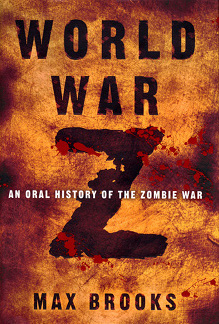
World War ZIf anything makes a zombie story at all interesting, it centers on some non-zombie aspect of the story. Which is true of the zombie CD I watched this afternoon, World War Z. I only picked it up at the library because I was in a hurry and willing to take just about anything. (Actually, I think what caught my attention was the cover which shows Brad Pitt in front of a big red Z ... which might have something subliminal to do with my childhood fascination with Zorro, but I can't say for sure.)

World War Z book cover.jpgThe 2013 movie is based on a 2006 book by Max Brooks, the son of -- go figure -- Mel Brooks. (Isn't the serendipity that moves the world just too marvelous?) I would have requested the book from my local library, but the only format they have it in is electronic, and since I have no Kindle or other related hardware, I guess I'll just have to rely on the movie to fill my zombie quota.

So, let's talk about the movie. Actually, I don't want to. The movie is boring, so why should I waste our time talking about it? The only thing that made any difference to me was one short sentence uttered at the end of the movie by the hero, Gerry Lane. In a voice-over on top of the most lackluster reunion of a nuclear family unit I've seen, Lane says that in order to overcome the zombie plague, humans must help each other. In fact, his simple declarative statement is: "Help each other." And that is what I want to talk about here.

I might be willing to take the stance that "Help each other" is the prime ethical injunction. However, what would happen if, oh, say, the Republican Party were to adopt the motto of 'help others'? Would they lay aside their frenzied money-grubbing and buy a homeless person a meal? Would they help subsidize the heating bill of an out-of-work single parent and children? Admittedly, the platform of the Grand Ol' Party includes many planks besides lack of social responsibility: the fear of centralized power, for instance, also holds a powerful sway over Republicans. (Ironically, their first President -- Lincoln -- fought viciously to preserve federal power.) However, one of the the main points of contention with the GOP lies in its aversion to Federally-funded social-assistance programs such as Food Stamps and Welfare which, despite all the fraud, help keep people alive. By casting such measures as experiments in socialism, Republicans can decry expenditures as undemocratic, and therefore unAmerican. The wealth-pots of conservatism justify their tightfistedness by painting anyone who just happens to be out of luck and needing a helping hand, as a two-bit Commie slacker, an attitude which reminds me of the time the radical Jewish teacher Yeshua told a rich young ruler to sell everything he had and give it to the poor ... something no conservative in our time could do either, even to please God Himself.

So the question raised by this movie comes down to whether individual Republicans, without crucial networks of mutual support and benevolence, could survive a zombie apocalypse. Then again, with that said, when is it not the zombie apocalypse?

Wednesday, May 13, 2015

Mr. Updike


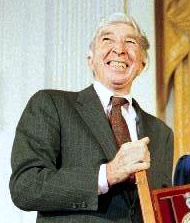
Trust Me.jpgThe other day, I finished reading The Book Thief, and, casting around for something to fill my time until I could get to the library, I picked up my copy of John Updike's short-story collection, Trust Me. John Updike. Now there's a name you haven't heard in quite a while. One of The Big Guns. The New Yorker. The Atlantic. Playboy. Born in 1932 in Shillington, Pennsylvania. Graduated from Harvard in 1954. Spent a year in England on a scholarship in Oxford. On the staff of The New Yorker from 1955 to 1957. One of only three writers to be awarded the Pulitzer Prize twice. Died in 2009.

In my early days, my preference ran to another writer named John -- John Cheever. (Whom I still recommend highly.) I had the impression that Cheever's stories were of a higher quality than Updike's, though I had never actually read any of Updike's. I assume this judgment came from what I had absorbed about Mr. Updike through nebulous remarks gleaned from reviews and book covers: his preoccupation with sex and infidelity, drinking and New England lifestyles. Not being married myself, I had little interest in the swirling interplay of personalities that made up a couple; their infidelities especially bored me. Raised Southern Baptist, I had little interest in the rutting habits of Northern Episcopalians. That a book by Updike came to rest on my shelf is due, I'm sure, merely to a casual saunter through some used-book store and a curiosity about a writer I had no real intention of reading.


John Updike with Bushes new.jpg
John Updike in 1989
That said, however, I admit I may have done Mr. Updike an injustice. The story I have just now finished -- "The Other" -- makes me think of the reddish-orange glow of sunset at the end of a warm September day. It has a feeling of languid nostalgia about it, a wistful reflection on what might soon be, tinged with a mild regret for what might have been. Yes, there is a casual, almost flippant, ambling on about carnal relationships, but there is also something shy, almost coy, with the language in which the author couches recognition of unrealized possibilities, of golden moments forever just beyond reach.

It may be that if I continue reading in this collection, I'll find all the other stories are merely disappointing variations on this same theme, redundant retellings to the point of tawdriness. My instinct, however, is to give Mr. Updike at least one more chance to prove himself. Who knows? Maybe I'll even like Rabbit Run.