Wednesday, September 21, 2016

Other People's Wars

Like most folks, I tend to think myself moderately savvy about the world, so it surprises me whenever I'm confronted with a slice of history with which I'm unfamiliar. (Which happens all the time.) Take for instance, the Siege of Leningrad during World War Two. Because the siege concerned two countries, neither of which was the United States, I -- and I assume, most Americans -- have little understanding of that engagement. Even though it was one of the war's most decisive confrontations, because it was fought on the other side of the world by groups which had little relevance to me a decade and a half later in my late 1950s childhood, it had no perceived impact on my tiny outpost in the backwoods of Arkansas.

The first inkling I had of its importance came with the U.S. film, Enemy at the Gates in 2001. The movie seemed to me mildly interesting, but nothing about it raised it above the thousands of other films just like it: a war movie with a love interest. Yeah, yeah, been there, done that. The impact of the setting was diminished by the banality of the subplot of boy-vs.-boy-for-girl.

My epiphany came with the book City of Thieves by David Benioff, one of the fellows responsible for bringing Game of Thrones to television. "Thieves" -- set in the Russian city of Leningrad (aka St. Petersburg) during the Nazi siege -- gives a stark depiction of what war means to people, be they generals dining on roasted chicken or urchins starving in the streets.
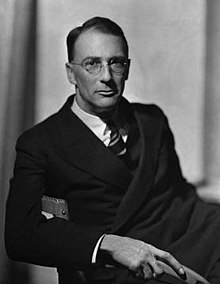
David Benioff

Here again is that universal guy-v.-guy-over-gal subplot demanded by contemporary market-driven bottom-liners, but at least the main plot of survival-during-wartime comes through with all its unflinching brutality. Strangely enough, this brutality is what gives the best reflection of its benevolent twin, nobility.

Even the surprise revelation of the ending doesn't detract too much from the overall hopeful tone of the book as a whole. After all, destruction-of-all-that's-civilized (a staple of Benioff's GoT series) is simply the evil twin of all's-well-that-ends-well.

Thursday, June 30, 2016

One Boat -- Two Perspectives


Image result for african queen movie poster
In 1951, when Humphrey Bogart won his only Oscar, it came for his performance as Charlie Allnut in The African Queen, a movie which consistently occupies any Best Movies list. The film became so popular, it overshadowed the book almost completely.

The author, C.S. Forester (1899 – 1966), wrote many novels, the most famous of which was the 12-book Horatio Hornblower Saga about a Royal Navy officer during the Napoleonic Wars. Forester also penned crime novels, children's stories, and science fiction. ("Cecil Scott Forester" was the pseudonym used by Cecil Louis Troughton Smith, an Englishman who eventually settled in the United States.)

CS Forester00.jpg
C.S. Forester
The story of both the book and movie (the "uberstory" so to speak) centers on the adventures of an unlikely two-person crew of a rattletrap of a tramp streamer as they try to escape the German army in the fictional country of German East Africa at the beginning of World War I. The task which Rose (Hepburn) sets herself and Charlie (Bogart) is to destroy the German ship which rules the waters of the lake into which their river empties.

One advantage fiction has is its ability to make characters' thoughts and feelings accessible to the reader in a direct way unavailable to film. Movies share a limitation with real life -- a viewer can only guess at characters' true motivation -- whereas a writer can simply tell a reader what characters are thinking/feeling/hoping/planning. The difference results in literature's ability to provide a deeper analysis of what it means to be human.

However, that doesn't mean literature always tells the better story.

With Forester's background in portraying naval history, his point of view naturally defaults to that of the military. Which means that although the novel does a better job of revealing why Rose and Charlie are the people they are, the real focus of the novel centers more on the conflict of the Great War; characters serve only as conduits of History, a very European point of view.

John Huston - publicity.JPG
John Houston
Director John Huston, on the other hand, focuses on the characters and how they interact, change, and develop as individuals, a very American point of view.

This artistic difference manifests itself in its most pronounced way in the different endings of the two genres: in the book, the African Queen sinks in a storm and the British navy destroys the German boat; in the movie, by one of the most improbable coincidences, the Louisa manages to run into the flotsam of the wreckage of the Queen, exploding the improvised torpedoes Charlie has rigged, thereby sinking the German boat.

So, which is the real story of the African Queen? Is the true version that of the original author, or that of the more widely experienced movie? Does it make sense to say that both versions, though different, are true? What does truth mean in art? Do the two versions represent a Venn diagram with an area of overlap, or are they two completely separate universes with no common ground at all? Can truth be represented in multiple ways and still be truth? Is truth contextual or universal? Does The African Queen, in both or either of its guises, answer any of these questions? What does art do?

Wednesday, May 25, 2016

Questioning Questioning

One of the most basic questions a human being can ask is "What is life?"

In the past, the religious community has dealt with this conundrum. Shamans, priests, and preachers have claimed exclusive revelation about the answer. Nowadays, science -- our new religion -- has taken up the challenge. Instead of being divinely inspired, however, modern teachers are institutionally accredited. Which, like faith, also has the disquieting feel of knuckling under to authority, for the paranoid among us.

The popular press has for some time published volumes on the subject of the electric basis of life. Two such examples are the recent The Spark of Life by Dame Frances Ashcroft and from 1985 Robert O. Becker's The Body Electric. Each of these works explores the function of electricity within and among the basic building blocks of the body -- cells. However, Nick Lane, a biochemist in the Department of Genetics, Evolution and Environment at University College London, takes a rather more in-depth look at the mystery in his The Vital Question. (A presentation by Dr. Lane can be found here.)

book coverAlthough all three books have at their core the idea of bioelectricity being what powers living cells, Dr. Lane's book goes furthest into the hows and whys of the matter, explaining the difference between electricity, the flow of negatively charged electrons, and proticity, the flow of positively charged protons, an idea first formulated by Peter D. Mitchell. "Essentially all living cells power themselves through the flow of protons...." The harvesting of power from "...proton gradients...is universal across all life on earth...." (page 13)

A major tenet of Lane's thesis is that single-celled life arose some 4 billion years ago around alkaline hydrothermal vents on the deep ocean floor. Eventually, two radically different forms of life emerged, though both were based on the same energy gradient structure. Those two forms were bacteria and archaea -- what are termed the prokaryotes (from the Greek 'before the nucleus'). Complex cells -- the eukaryotes ('true nucleus') which make up all the rest of the plethora of life on this planet -- came about, according to Dr. Lane, as a result of a synthesis between the other two, "an endosymbiosis in which a bacterium got inside an archaeon, enabling the evolution of vastly more complex cells." (pages 13 - 14) He further states that there arose a founder population of essentially identical cells which happened only "on a single occasion -- and all plants, animals, algae and fungi evolved from this founder population." (page 40)

Eukaryotes harnessed the savings in energy which came from a simplified gene structure; they had much more power at their disposal. The metabolic rate (energy per gene) of eukaryotes exceeds by several factors that of the prokaryotes. Human beings "use about 2 milliwatts of energy per gram -- or some 130 watts for an average person weighting 65 kg [143.3 lbs], a bit more than a standard 100 watt light bulb. That may not sound like a lot, but per gram it is a factor of 10,000 more than the sun". (page 64) Each one of us literally burns brighter than the sun.

In the earliest times of life on Earth, this huge energy supply drove the explosive diversification of flora, fauna, and microbes. Interestingly, "there is a deep and disturbing discontinuity at the very heart of biology". (page 21) One of Lane's more startling propositions is that evolutionary biology is not predictive. That is, even if we knew all the starting perimeters, we could not foresee the forms which life would take. Just as the Uncertainty Principle means that both the trajectory and the position of an atomic particle cannot be known simultaneously, and Chaos Theory means patterns of repetition cannot be predicted, so the course of life can never be charted. Freedom, stark and beautiful, holy and terrifying, is in our very genes.

Wednesday, May 4, 2016

War Dancing


Some people like radishes. Others prefer bananas. This difference manifests itself not only in culinary choices, but in other areas of life as well. Some readers like literary fiction; others prefer popular titles. Some folks like George R. R. Martin; others prefer J. R. R. Tolkien. Some people like Tony Hillerman; others prefer Sherman Alexie. Mr. Hillerman won honors for his mystery fiction, including the Mystery Writers of America's Edgar award; Mr. Alexie won, among other prizes, the 2010 PEN/Faulkner award for his collection of poems and short stories, War Dances, the title story of which appeared in the August 10, 2009 issue of The New Yorker.

Winner of the PEN/Faulkner Award. I still can't believe I won that huge prize! Learn more at Grove.The point I want to bring up with Mr. Alexie's writing is how much whitewashing goes on in the selection of which writer wins which award, and what writer gets published by whom. Like so much else in capitalist America, publishing exists to make money. Which means editors will buy only those manuscripts they think will appeal to the most buyers. Therefore, they aim at the lowest common denominator. Which in a market dominated by Euro-Americans means Euro-Americans.

So for a non-Euro-American writer to break through in the United States market, his or her writing must appeal to the majority of Euro-American readers. Which means the writing must conform to Euro-American standards and taste. Which means that even when the writer is a bona fide outsider -- as in the case of Mr. Alexie or Toni Morrison or Gore Vidal --  that writer must still engage a majority of Euro-American readers. Which means that no successful Tribal or Black or Gay writer has ever been able to achieve real, meaningful cross-culture appeal. To attract the most readers, a writer must appeal to the most readers. Which in North America means middle-class white.

Mr. Alexie's stories are alternately funny and poignant, touching and barbed. They give a view of the universal human experience. However, they do that through a biased lens. Because of that, their truth is subjective. Though they are about people on the fringe of society, they are still about people in society. They are ultimately Euro-American tales. Because that is what Euro-Americans want.

And that is whitewashing.

Tuesday, January 5, 2016

Somewhere Somebody Sings Something


Cover image for The body electric : electromagnetism and the foundation of lifeThe Body Electric by Dr. Robert O. Becker and Gary Selden, first published in 1985, explores the human body's use of bioelectromagnetism. Dr. Becker directed Orthopedic Surgery at the Veterans Administration Hospital in Syracuse, New York, and was one of the pioneers investigating electric fields produced by living bodies.

Dr. Becker's concern with the injuries of veterans led him to a series of experiments using animals with known regenerative abilities such as salamanders and the tiny hydra. Whereas several lizard species can regrow lost tails, the hydra will regenerate in a myriad of ways: slice the tentacles off one, and they will regrow; cut a hydra in half, and two complete organisms will result. As long as a section of the trunk is preserved, any number of full creatures will regrow. Becker was not the person who discovered this. In the 1740s, a Swiss scientist named Abraham Trembley, a student of the great French naturalist Antoine Ferchault de Reaumur, shocked the world with his description of the powers of regrowth of the hydra.

With this as background, Becker and Selden embark on their exploration of the notion of the elan vital, the supposed anima or spirit that makes living things so vastly different from other substances. The authors inject the notion of electricity as that sizzle of life.

Though the science of The Body Electric seems a bit stiff compared to Ashcroft's The Spark of Life, the essence of both their presentations is the same: life generates electricity ... or maybe it's electricity that generates life. Or maybe it's that life and electricity are the same. Becker goes further than Ashcroft initially, however, by proposing a scenario of the emergence of life on earth from electro-chemical properties of the early environment. Whereas Ashcroft's argument degenerates into a denial of free will, Becker's spins off into cryptic warnings about the dangers of high-voltage power lines and the effects of electromagnetic radiation on health.

Whereas the first two-thirds of Becker and Selden's book reveals in fascinating detail how living bodies are defined by their application of electrical potentials, the last part loses a large measure of its scientific credibility due to its strong flavor of conspiracy theories. Although both The Body Electric and The Spark of Life make important major contributions to our understanding of life and consciousness, in the end, they both fall victim to philosophical musings better suited to methods of knowing other than science.

This article in the 25 November 2013 issue of The New Yorker gives an exhilarating look into the possible applications of cellular electronics and their benefits. More evidence that life is, after all, electrical in nature.

Wednesday, November 25, 2015

I Sing the Body Electric


Frances_Ashcroft_new
Dame Frances Ashcroft
Frances Ashcroft's beautiful, beguiling, fascinating book, The Spark of Life, shows how everything that happens in our bodies -- from muscle movement to cognition -- is powered by electric signals leaping from cell to cell, produced by chemical reactions instigated by processes inside the cells themselves. The movement of chemical molecules through ion channels, a form of molecular gateway in the membranes of all living cells from amoebae to blue whales, induces the discharge of voltage which causes changes in the cells themselves. When cells fire in proper sequence, the propagation of the electric wave through nerves and muscles causes, for example, an arm to reach, fingers to close, a hand to grasp.

Ashcroft, a research fellow at Oxford University in England, specializes in ATP-sensitive potassium channels as they relate to insulin secretion, type II diabetes, and neonatal diabetes. She was appointed a Dame Commander of the Order of the British Empire in 2015.

Like many another scientist, when Dame Ashcroft approaches the topic of self and free will, she concludes that "Free will, like so much else, is merely an illusion." (page 283) Brilliant researcher she may be, but a philosopher she isn't. She fails to realize that her acceptance of the ontological reality of the world is as much an act of faith as is belief in the Buddha's incarnation. She states that "most scientists would now agree that consciousness emerges from the electrical activity of the brain". What she doesn't realize is that the self is beyond linguistics; it uses language merely as a tool for communication -- it 'emerges' as its ability to transfer ideas matures.

The difference between 'will' and 'thought' corresponds to the difference between doing and thinking. I can think about moving my arm all day long, but until I actively will my muscles to contract or relax, nothing happens. In fact, in some cases, thinking results in inferior results. When I type, if I consciously try to think about which keys to press, my typing slows almost to a standstill; it's only when muscle-memory takes over, and I don't think about it, that typing occurs. Will power, not thinking, is the hallmark of the individual.

Dame Ashcroft's book does nothing to examine more finely tuned questions such as how I can know other minds exist, and that they experience the world and themselves in the same way I do. The fact that the subjective experience of self might merely hinge on the correct sequence of firing of neurons in the brain says nothing about a sub-lingual self.

Further, Ashcroft's thesis assumes the existence of an external world. When you talk about the mind's place in the world, you presuppose both a mind and a world. Do our perceptions of the world in some way create that world, or is it that the world creates our perceptions? Are our perceptions contingent on the world, or is it the other way around? Is it possible to know things in a extra-linguistic way, in a way that language cannot express? What do we say when nothing can be said? How can sparks of bio-electricity be self-referencing? Does the mind arise from the scintillating brain or merely from its own invention, language? Is it possible to have knowledge that falls outside of language? Where does knowledge end and faith begin?

In developmental psychology, is the self created or is it unveiled? Does the learning of language create the mind, or does it merely supply a tool for the already existing mind to interact with the world? How can even neuroscience answer such a question?

Science can only make verifiable statements about the world; it cannot make value judgments. The scientific method can never be used to justify itself.

Tuesday, September 15, 2015

The Book Thief

Sometimes the most obvious answer isn't the right one. Sometimes questions are too complex for simple responses. Some questions go for generations with the wrong answer. How can we ever be certain we have the right one?

For instance, how much longer are we going to preach and shout and scream against the Nazis and their final solution, and yet not condemn the murder, rape, and pillage carried out against American Tribal peoples in the name of capitalism and progress?

I'm not trying to defend Nazism or the horrors perpetrated under the swastika. Kidnapping, torture, and murder should never be condoned or covered up. What I'm trying to do is understand people. Specifically, the German people. More specifically, the German people in the 1930's and 40's. The reason I'm thinking about them is because they could have been any of us. Any of us could have been them.

We've all heard the assessments and excuses. The end of World War One saw the complete demolition of German society. The Nazis promised renewed greatness. The economic predicament was staggering. The Nazis promised renewed fortune. Who wouldn't have raised the salute when promised a crust of bread in the new order to come?

Too often analysis focuses on the monsters and forgets about the average person. One of the strengths of The Book Thief is that it deals with a small girl living in Germany at the time of the rise of the Nazi party. One of its weaknesses is that it deals with the rise of the Nazi party in Germany.

A problem occurs when we examine a section of history so closely that we lose sight of its context in the broader picture. The horror of the Nazi experiment stains not just one or two generations of Germans, but the whole of the human race. Each and every one of us is culpable. Even a llama farmer in the Andes mountains five hundred years before Cristoforo Colombo. Just as all human beings can rejoice in the creation of the Mona Lisa, we all bear the guilt of the concentration camps.